
How to Care for a Handmade British Leather Belt
A well-made leather belt should last a lifetime, and often much longer. With thoughtful, minimal care, a handmade British leather belt doesn’t just remain functional; it improves with age, developing depth, colour, and character that can’t be rushed or replicated.
All of my belts are handmade using oak-bark tanned, full-grain British bridle leather, cut from the butt, the strongest part of the hide. This is leather traditionally used for saddlery and harness work, chosen for its strength, density, and longevity. It’s made slowly, using methods that have stood the test of time, and it behaves very differently from modern, mass-produced leather.
Leather like this wants to be left alone. Less is more. Let it do its thing.
Below, I’ll explain how to care for your belt properly, avoid the common mistakes I see far too often, and help it age naturally, just as it’s meant to.
Why Oak-Bark Tanned British Leather Is Different
Oak-bark tanned leather is not quick leather. It’s processed over many months using natural tannins, rather than harsh chemicals designed to speed things up.
The result is a leather that is:
Exceptionally strong and long-lasting
Naturally breathable
Rich in its own oils
Designed to age gracefully, not wear out
Because of this, a handmade belt made from British vegetable-tanned bridle leather doesn’t need constant attention. In fact, over-treating it is one of the quickest ways to damage it.
I’ve spent over 15 years working with leather as a qualified saddle and harness maker, and I’ve also learned to tan leather myself to truly understand the science of the fibres. One thing that experience teaches you very quickly is this: good leather doesn’t need fussing.
Use the Right Leather Balm, and Use It Sparingly
I recommend using my own natural leather balm, made specifically for the oak-bark-tanned British leather used in my belts.
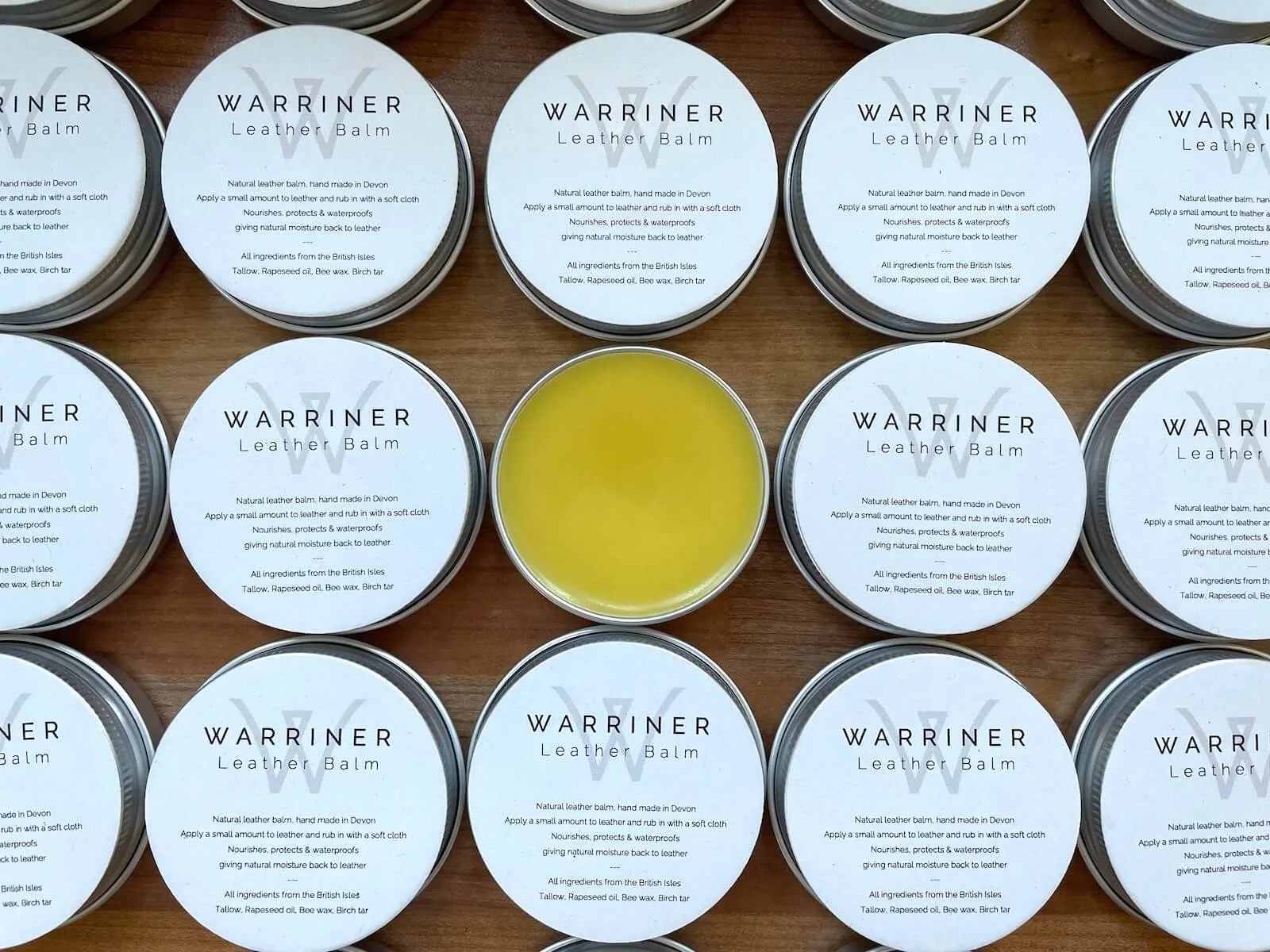
When I developed it, I looked closely at what traditional tanneries use in their finishing processes. If those ingredients are trusted to finish the leather at the tannery, they’re exactly what’s needed to maintain it properly at home.
A light application once or twice a year is more than enough to:
Replenish natural oils
Keep the leather supple
Enhance patina without clogging the grain
Apply sparingly with a soft cloth and allow the leather to absorb it naturally. More product doesn’t mean better results, it usually means the opposite.
Let the Leather Breathe
Leather is a natural, living material, and it needs air to stay healthy.
Avoid airtight containers or plastic bags
Store your belt in a cool, dry place
Allow airflow around the leather
Breathability keeps the fibres flexible and prevents trapped moisture. This is especially important for thick, dense bridle leather, which is designed to work hard and last for decades.
What to Do If Your Leather Belt Gets Wet
If your belt gets caught in the rain or becomes damp:
Let it dry slowly at room temperature
Keep it well away from radiators, fires, or direct sunlight
Heat dries leather too quickly, causing the fibres to stiffen and, over time, crack. Slow drying is always best, patience here pays off in the long run.
Cleaning Your Handmade Leather Belt
Day-to-day care should be simple.
Wipe with a soft, dry cloth to remove dust
For deeper cleaning, use a slightly damp (not wet) cloth
Only apply a very light coat of leather balm if the leather feels genuinely dry
Avoid soaps, shoe polish, synthetic conditioners, and heavy oils. Products like neatsfoot oil, especially modern versions, can oversaturate leather and rot stitching over time. I see this damage regularly, and sadly it’s almost always irreversible.
Store Your Belt Properly
How you store your belt matters more than people realise.
Hang it or lay it flat
Avoid rolling it tightly for long periods
Let it rest naturally without sharp creases
Good storage helps a belt keep its shape and strength, especially when it’s made from thick 4–5 mm bridle butt leather like mine.
Embrace the Patina
One of the great pleasures of a handmade leather belt, particularly for outdoor folk, tradespeople, and those who live in their boots and jeans, is how it ages.
Patina isn’t damaged.
It’s life.
Darkening colour, small marks, and a soft sheen; these are signs of a belt that’s been worn, worked in, and trusted. Leather tells the story of naturalness and truth. It grows old with us, carrying the marks of the journeys it’s shared.
Every belt becomes individual. No two ever age the same.
Don’t Over-Condition
Vegetable-tanned leather doesn’t need frequent treatment. Over-conditioning can:
Saturate the fibres
Reduce breathability
Dull the natural finish
A light, occasional application is all that’s required. If in doubt, leave it alone.
Leather wants to be left alone.
A Belt Made to Outlast Us
With simple, thoughtful care, a handmade leather belt made in the UK can last for decades — and then some. These are heirloom pieces, made the way things used to be made: well, honestly, and to endure.
They’re designed to be worn hard, repaired if ever needed, and passed down through generations, gathering stories along the way.
If you’re looking for a British handmade leather belt made for outdoor life, workwear, and everyday wear, something to grow old with, you can explore my full range of handmade belts here.
Have a Question About Leather Care?
If you’re unsure how to care for your belt, or would like advice on choosing the right leather for your lifestyle, whether that’s outdoor use, trade work, or everyday wear, feel free to get in touch.
I’m always happy to help.