
Mud on your boots. Rain in the air. Hands worn and callused from proper work. That’s the rhythm of life outdoors; steady, honest, and hard-earned. And the things you carry with you every day ought to reflect that same life.
That’s where handmade leather belts for outdoor folk come into their own. Not just for their strength, but for how they change over time. A good belt doesn’t stay looking new, it grows into itself. It takes on the marks, the wear, and the years and becomes something personal.
It’ll darken where your hands rest on it. Soften where it bends with you day in, day out. Pick up the odd scuff, the mark from a tool, the memory of a job well done. No two end up the same, and that’s exactly the point.
That change is called patina. And it’s not damage, it’s character.
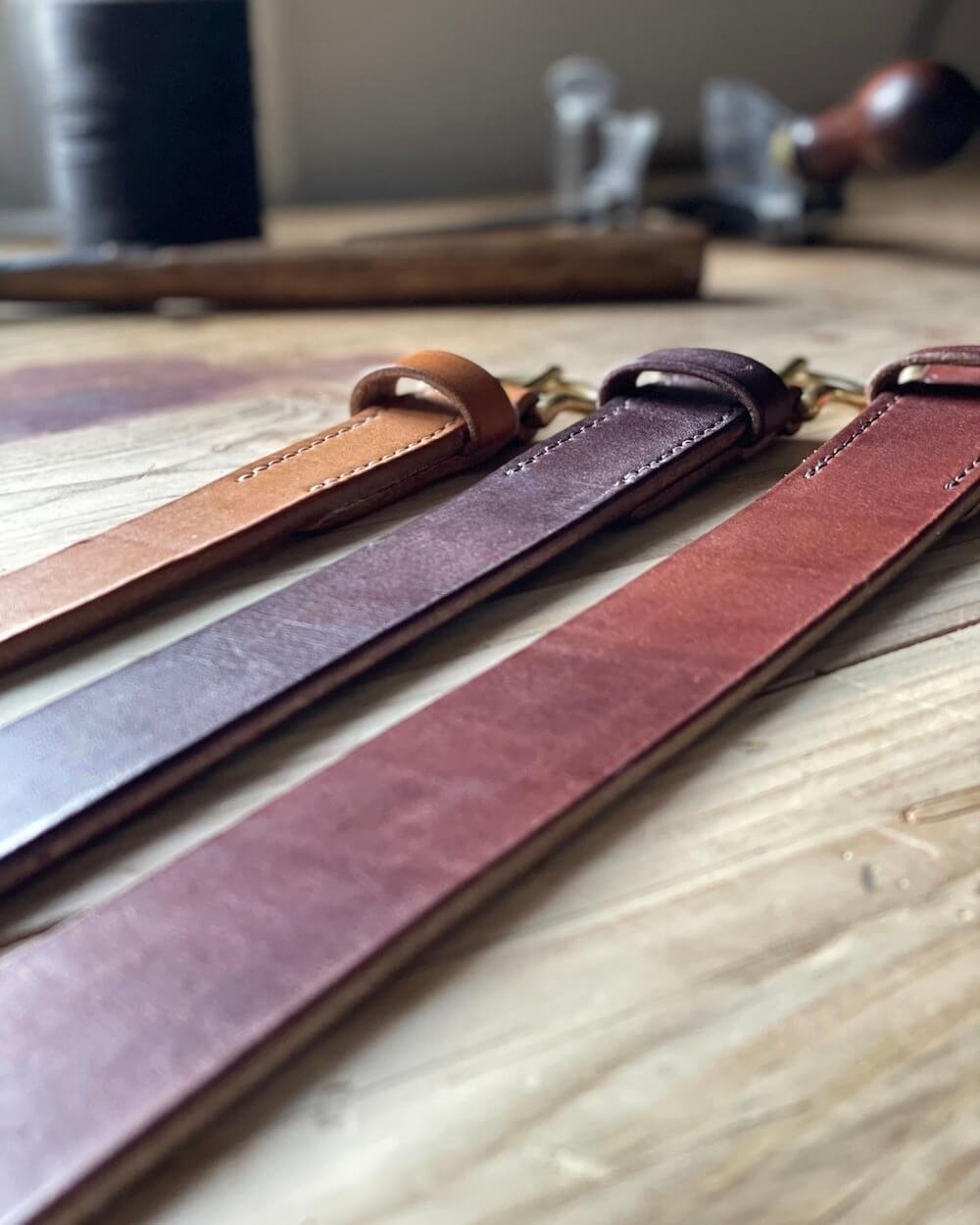
What Is Patina and Why Does It Matter?
Patina is the natural ageing process of leather. The way it darkens, softens, and develops depth through use, exposure, and time. It’s what turns a new belt into something that feels like it’s truly yours.
Vegetable-tanned leather absorbs the traces of our lives, maturing and ageing with a natural honesty that you just don’t get elsewhere. Over time, it develops a deep, rich patina that becomes more intense the more you handle it. This is leather that grows old with you, a living material that carries your story.
A proper full-grain leather belt allows this to happen because nothing has been stripped away. The surface remains intact, meaning it can respond to the world around it. Oils from your hands, the weather, and the work you do. It doesn’t just wear out, it wears in.
It’s the kind of material that rewards use, not careful avoidance. The more you put it through, the better it looks and feels.
That’s something you won’t get from heavily treated or artificial materials.
Why Outdoor Folk Appreciate Leather That Changes Over Time
There’s something in honest outdoor work that leans towards things with a bit of soul.
There was a time when people owned fewer things but better ones. Tools were made properly, clothes were built to last, and everything had its place. You didn’t replace things lightly. You used them and relied on them, and over time they became part of your life.
That same mindset still runs through the outdoor world now.
A proper heritage leather belt isn’t just something you wear; it goes with you. Through long days, hard graft, and shifting seasons. It takes on the journey. It becomes familiar in the way only well-used things do.
Synthetic belts and heavily processed leathers don’t give you that. They stay flat, lifeless. No change, no depth. And when they fail, that’s the end of them.
A good belt doesn’t fail like that. It changes, it adapts, and it carries on doing its job, all while building character.
Handmade Leather vs Treated, Genuine or Bonded Leather
Not all leather is equal, and how it’s made shows itself over time.
A proper handmade leather belt made from oak-bark-tanned leather is built to age well. Oak bark tanning is a slow, traditional process that strengthens the fibres without sealing them off. It leaves the leather open to the world so it’s able to breathe, move, and take on character naturally.
Treated or corrected leather is a different story. It’s often sanded down and coated to give a uniform look, but in doing so, it loses that ability to evolve. What you see on day one is more or less what you’ll have years down the line.
Then there’s bonded leather, often passed off as “genuine leather". That’s made from leftover scraps glued together and coated to look the part. It might do for a while, but it won’t last, and it won’t develop a true patina.
With proper materials and traditional methods, you end up with a traditional leather belt that doesn’t just survive the years, it improves with them.
A Timeless Classic, Not a Disposable Accessory
There’s a clear difference between something made to last and something made to be replaced.
A belt, when it’s done right, isn’t an accessory you swap out every season. It’s part of your everyday kit, something you rely on without thinking.
That’s why a well-made handmade leather belt stands apart. It’s not chasing trends or designed for a short life. It’s built with longevity in mind, both in strength and in how it ages.
Over time, it becomes more than just something that holds your trousers up. It becomes a record of where you’ve been and what you’ve done.
That’s where the real value lies.
FAQs
Does all leather develop patina?
No, only vegetable-tanned leather develops a true patina.
That’s the only leather I use in my workshop. Bark-tanned and veg-tanned leathers have life in them, they move, bend, and evolve with the journeys you take them on.
Chrome-tanned leather will more or less stay as it is throughout its life. It doesn’t develop that same richness or depth.
Full-grain leather keeps the strongest part of the hide intact, allowing it to age properly. Corrected leather has been sanded and coated, limiting that process. And bonded leather, often labelled as “genuine leather”, is made from scraps and simply doesn’t behave like real leather at all.
How long does it take for a belt to develop character?
That depends entirely on how you use it.
Daily wear, the kind of work you’re doing, exposure to the elements, it all plays a part. A belt that’s worn hard will develop character quickly. One that’s only worn now and then will take longer.
I always say, 'Don't baby it.’ Go and use it. Let it do what it’s meant to do, as that’s how it becomes yours.
Will rain damage a leather belt?
Yes, it can, if it’s not cared for properly.
Leather will take on water, and over time that can affect it. But a bit of rain isn’t the end of the world. Just let it dry naturally and keep it conditioned so it doesn’t dry out or crack.
If you want to get the best life out of it, it’s worth following a proper care routine. A little bit of maintenance goes a long way in keeping a good belt going for years. To help care for your belt you can read my leather care guided here.