
If you spend your days outdoors, whether that’s farming, shooting, hiking, climbing, grafting on site, or working the land, you already know one thing: your kit has to earn its place. There’s no room for flimsy gear when you’re relying on it day in, day out. That’s exactly why handmade leather belts for outdoor folk have never gone out of favour.
Those of you who work outside know that it’s not about trends, it’s about what works. Boots that hold up, tools that don’t fail, and a belt that does its job without fuss. The old way of doing things still stands for a reason: you buy one good thing, you look after it, and it sees you through for life. Done properly, it doesn’t just last, it gets passed down.
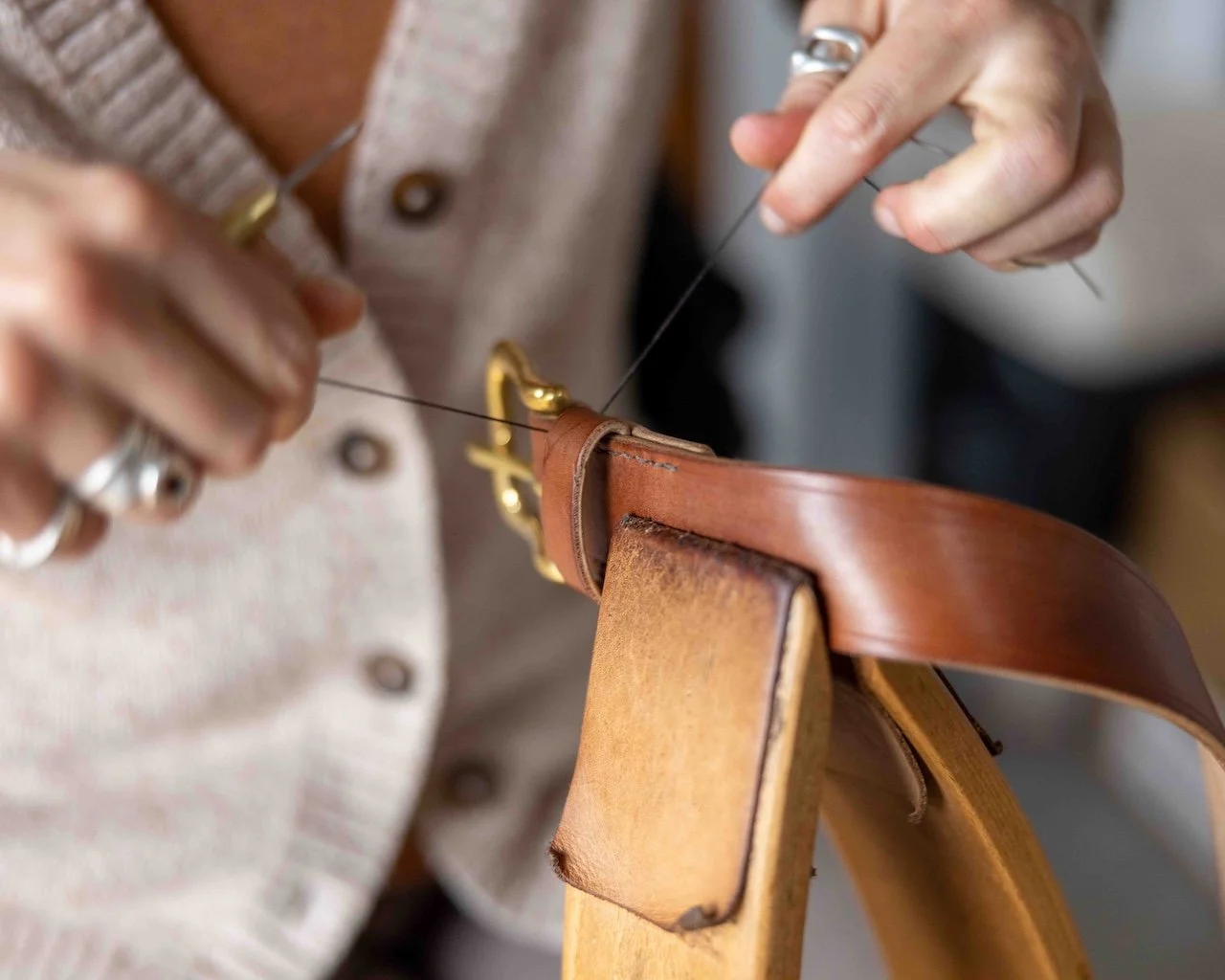
That’s the thinking behind every belt I make. Proper materials, traditional methods, and no cutting corners. Just honest gear built for a hard life.
Built for Hard Wear and Real Conditions
The outdoors isn’t forgiving. Mud, rain, strain, weight; it all takes its toll. That’s why a proper outdoor leather belt needs to be built differently from the start.
My belts are cut from full-grain, oak-bark-tanned leather and come in at around 4–5 mm thick. That thickness isn’t by accident; it’s what gives the belt its backbone. It won’t stretch out, sag, or lose its shape when it’s under load. Whether you’ve got tools hanging off it or you’re just wearing it from morning through to dark, it stays solid and does its job without a second thought.
Then there’s the stitching. I use traditional hand-saddle stitching. It takes longer, but there’s a reason it’s been done this way for generations. If a machine stitch goes, it can unravel along the whole line. With saddle stitching, each stitch is locked off individually, so even under strain, it holds fast. It’s simply the only way to do it if you want something that lasts.
The buckles are just as important. I use solid brass cast hardware, the same kind used in heavy horse use work, made in a foundry in Walsall. It’s proper, time-tested gear designed to take weight and wear without giving up.
Compare that to mass-produced belts, often made from thinner, lower-grade leather with bonded layers and cheap fittings. Let me tell you, they might look the part at first, but they don’t last, not in real conditions.
Practicality Matters More Than Trends
Outdoors, function always comes first. A belt isn’t there to make a statement, it’s there to do a job.
That means getting the basics right. My belts range from 1 inch to 2 inches wide, with 1.5 inches being the most popular, a solid, dependable size that works across most uses without digging in or feeling bulky.
A good traditional leather belt should sit comfortably from first light to last, whether you’re moving, lifting, or standing around in the cold. No fussing, no adjusting, just doing what it’s meant to do.
Craftsmanship You Can Rely On
There’s a reason traditional leatherwork methods have stuck around: they work.
A proper handmade leather belt isn’t rushed. The leather is selected carefully, cut cleanly, and worked in a way that respects the material. Full-grain leather is left intact, keeping its natural strength and character, rather than being sanded down or filled to hide imperfections.
That strength is what gives the belt its backbone. It moulds to you over time, softening where it needs to, but never losing its integrity.
At Warriner Leather, that’s the standard. No shortcuts, no compromise, just belts made the way they should be, so you can trust them without thinking twice.
A Belt That Lasts for Years, Not Months
By the way, there’s a big difference between something that lasts and something that endures.
A proper durable leather belt isn’t something you replace every year. It’s something you wear in, look after, and keep going with for decades. It becomes part of your daily kit, familiar, dependable, and better with age.
That’s also the more sustainable way of doing things. Buy once, buy well. Fewer replacements, less waste, and far better value in the long run.
And I’ve seen it firsthand. The first belt I ever made was over 20 years ago. I gave it to my fella Charlie for his birthday. He’s as outdoorsy as they come: a carpenter, tree surgeon, and festival site rigger. That belt has been around his waist pretty much every day since.
Twenty years on, it still looks as good as the day I made it.
That’s what you should expect from a proper belt.
FAQs
Are handmade leather belts better for outdoor use?
Yes, simply because of how they’re made. A handmade leather belt uses stronger materials, thicker cuts of leather, and traditional construction methods that hold up under real strain. They’re built for work, not just for show.
What type of leather is best for outdoor belts?
Oak-bark-tanned leather is about as strong and durable as it gets. It’s tanned slowly using natural tannins, which creates a dense, hard-wearing material that stands up to years of use.
Pair that with full-grain leather, where the surface hasn’t been sanded or weakened, and you’ve got a full grain leather belt that keeps all its natural strength. It won’t split, peel, or give up like lower-grade leathers.
How long should a quality leather belt last?
If it’s made properly and looked after, a belt should last your entire life and beyond.
With a bit of leather belt care now and then, you’re looking at decades of use. And as proven with Charlie’s belt, even after 20 years of daily wear in tough outdoor conditions, it’s still going strong.