
What Is Leather Balm, And Do You Really Need It?
There's a question I get asked fairly regularly, usually from someone who's just invested in a piece of leather they want to take care of properly. They've heard about leather balm, they're not entirely sure what it is, and they want to know if it's actually worth using.
The answer is yes, but only the right kind, applied in the right way.
Here's everything you need to know.
What Is Leather Balm?
Leather balm is a conditioning and protective treatment designed to nourish leather from the inside out. The balm works with the natural structure of the leather rather than sitting on the surface of it.
Good leather, particularly vegetable-tanned and oak-bark-tanned leather, is full of natural oils. Over time, with exposure to weather, wear, and everyday life, those oils are slowly lost. The leather begins to dry out, stiffen, and eventually crack. A leather balm replenishes those oils, restores flexibility, and gives the leather what it needs to keep going.
But it goes deeper than simply “adding oils back in". Leather is tanned at an acidic pH, typically between 3.5 and 4.8 on the pH scale, and it remains at this slightly acidic level throughout its life.
Using ingredients that respect that balance is essential. The wrong oils can disrupt the fibre structure at a molecular level, while the right ones support and strengthen it over time.
Think of it less as a product and more as part of a ritual. A small act of care that keeps a good thing going.
What Is Leather Balm Made Of?
Most products on the market are full of parabens, petrochemicals, and oils imported from the other side of the world. Avocado oil, sweet almond oil, jojoba; none of these are what traditional tanneries have ever used, and there's a reason for that.
Plant-based oils have a fundamentally different pH structure to animal fats. They don’t align with the natural chemistry of leather, and in many cases, they sit on the surface rather than properly conditioning the fibres. Some can even contribute to long-term damage, particularly to stitching.
Worse still, they can slowly dry the leather out over time. It’s a bit like an instant dopamine hit; the leather feels soft, rich, and supple at first, but that effect is only temporary. Over time, these oils fail to properly nourish the fibre structure, and the leather can begin to dry, stiffen, and eventually crack.
There’s also a more obvious point that often gets overlooked: leather is animal skin. Reintroducing animal-derived fats back into animal-derived material is simply logical. It’s how leather has been treated for centuries because it works.
There is a reason why traditional tanneries and curriers rely on animal fats rather than plant-derived alternatives. It isn’t nostalgia; it’s proven function.
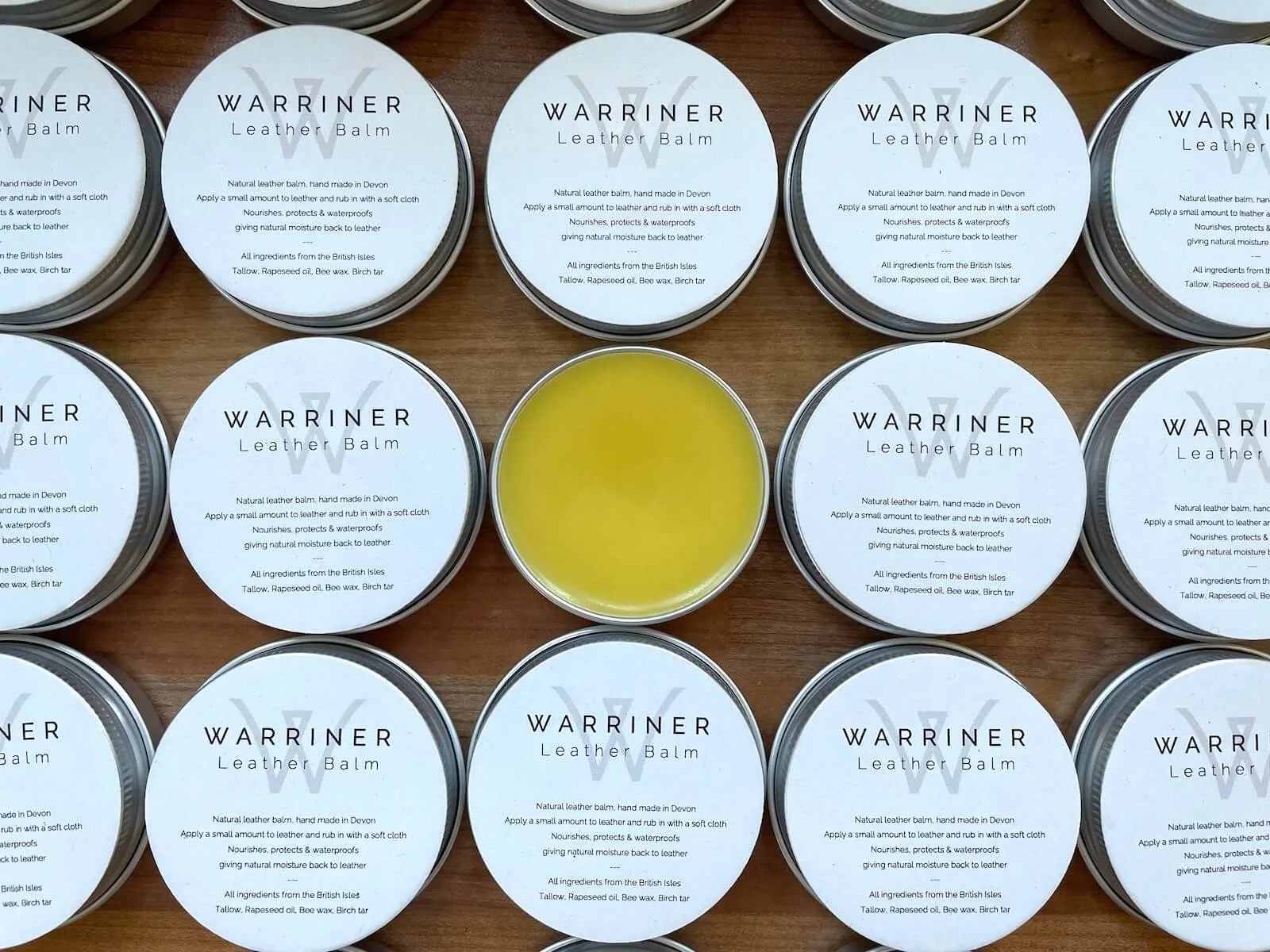
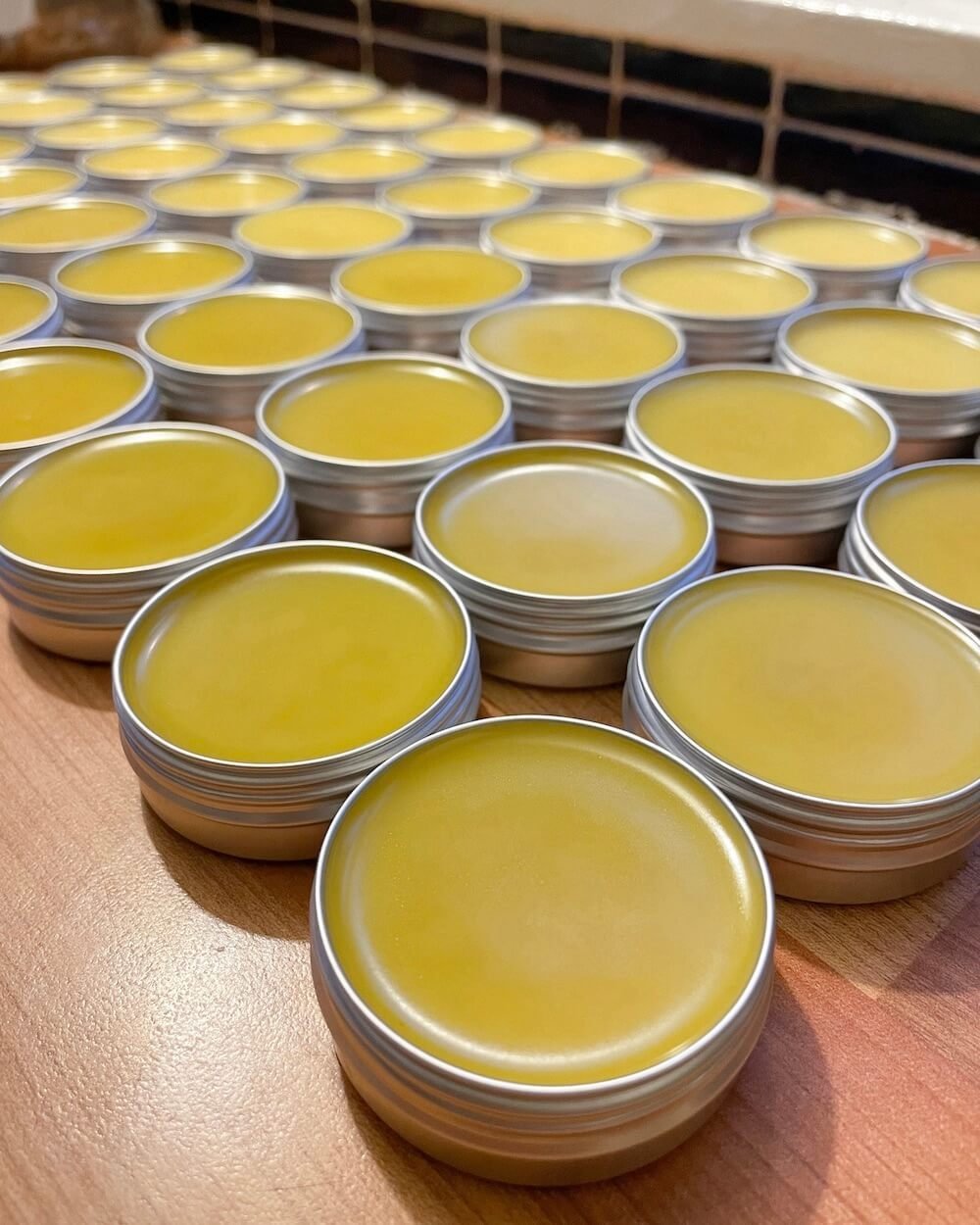
My natural leather balm is made from four ingredients, all sourced from small British producers within 50 miles of my workshop in Devon:
Tallow
The traditional choice of British tanneries, used to replenish the natural oils lost during the vegetable tanning process. More importantly, it aligns closely with the leather’s natural pH and internal structure.
But what is tallow, really? It’s simply rendered animal fat, most commonly from beef or sheep, slowly purified into a stable, usable form.
It’s an age-old ingredient that’s been used across everything from cooking to candles to leather care. Its versatility is something we’ve largely forgotten in the modern world, replaced by synthetic alternatives, but it’s now beginning to make a quiet resurgence. In leatherwork, it never really went away.
Rapeseed Oil
Helps carry everything else deep into the leather fibres, restoring softness without leaving a greasy residue behind.
Now, I can already hear the question: “But isn’t that a plant oil?”
Yes, it is. And I was sceptical about using it at first.
The key is in the quantity and the role it plays. It’s used in very small amounts, not as a primary conditioning ingredient, but as a carrier to help bind the recipe together and allow the other ingredients to penetrate properly.
Think of it like using an egg yolk in cooking. You don’t taste it, it’s not the main event, but without it, the whole thing doesn’t quite come together.
I did explore alternatives. Ideally, I wanted to use cobnut or walnut oil from a small British nut tree farm, something more aligned with my values than rapeseed, which is often grown as a monoculture. Cobnut oil in particular sits closer to leather’s natural pH.
But allergies are a real consideration, and in the end, that had to come first.
The rapeseed oil I use now is organic and comes from a small farm in Dorset, so while it may not be perfect, it’s chosen carefully and used with intention.
Beeswax
Provides natural waterproofing and forms a gentle protective barrier against moisture and dirt.
This wax comes from apiaries just a few fields away from my workshop, which keeps everything grounded and local.
Beeswax has been used for millennia, and for good reason. It’s reliable, natural, and works in harmony with other ingredients. It doesn’t seal the leather harshly, it simply protects it while still allowing it to breathe.
Birch Tar Oil
An old and somewhat secretive tannery ingredient with a rich, smoky scent and remarkable leather-preserving properties.
It’s naturally antibacterial and antimicrobial, helping to protect the leather from within as well as on the surface. The scent alone tells a story, deep, smoky, and unmistakably traditional.
I make this tar myself using birch from my garden and the surrounding woodlands. It’s a slow, hands-on process, but one that connects directly back to the older ways of doing things.
Rooted in Tradition, Proven in the Tannery
The recipe draws on centuries of knowledge from the finishers and curriers who have been caring for leather far longer than any modern product brand has existed.
It’s also shaped by years of my own observation. I spent a long time watching and researching what local tanneries, curriers, and finishers were using, not just the ingredients but also how they were applied and how they interacted with different leathers over time.
Tanning is an art, just like leathercraft. Creating something to care for that leather is no different. It sits somewhere between science and craft, and when it’s done properly, you can feel the difference.
What Types of Leather Can You Use It On?
This natural leather conditioner is formulated with oak bark-tanned leather in mind, the kind of dense, slow-made, full-grain leather used in traditional British saddlery, belts, boots, and bags.
It works beautifully on:
Belts and bridles
Boots and shoes
If you've invested in quality leather, this balm will help protect that investment for years to come.
How Do You Apply Leather Balm?
Applying leather balm is simple, and that's rather the point. It should feel like a quiet, unhurried task, not a fuss.
Clean the leather first. Wipe away any surface dirt or dust with a soft, damp cloth. Let it dry naturally at room temperature. Strictly no radiators or heat sources.
Apply sparingly. Using a clean cloth or your fingertips, work a small amount of balm into the leather using gentle circular motions.
Focus on dry areas. Give any stiff or particularly dry patches a little extra attention.
Leave it to absorb. Set the leather aside for a few hours, or overnight if you can. There’s no need to rush.
Buff gently. Once absorbed, buff with a clean, dry cloth to bring up a smooth, supple finish with a natural sheen.
A little goes a long way. Over-conditioning is one of the most common mistakes with quality leather, and it does more harm than good.
How Often Should You Use a Natural Leather Balm?
For most leather goods in regular use, two to four times a year is plenty. Good oak-bark-tanned leather is rich in its own oils and prefers to be left alone most of the time.
Items used in harder conditions — riding kit, working boots, and dog leads that live outdoors — may benefit from slightly more frequent treatment. Your leather will tell you when it needs attention. When it starts to feel dry or lose its natural give, that’s the time.
If you'd like to go deeper on leather care, my guide onhow to care for a handmade leather belt covers the full picture, from storage and drying to patina and why less is always more.
A Small Thing That Makes All the Difference
Quality leather, made well and cared for properly, lasts a lifetime. Often longer. It develops character, tells a story, and quietly improves with every year it’s worn.
A good leather balm is part of that story. A small, considered act that honours the craft, respects the material at its most fundamental level, and works with it rather than against it.